“She’s
ship shape and Bristol fashion,” says the old salt. What does he mean?
There
are really two phrases here. The first, “ship shape,” has a relatively obvious
meaning and can be traced back in usage to Sir Henry Manwayring’s Seaman’s Dictionary of 1644.
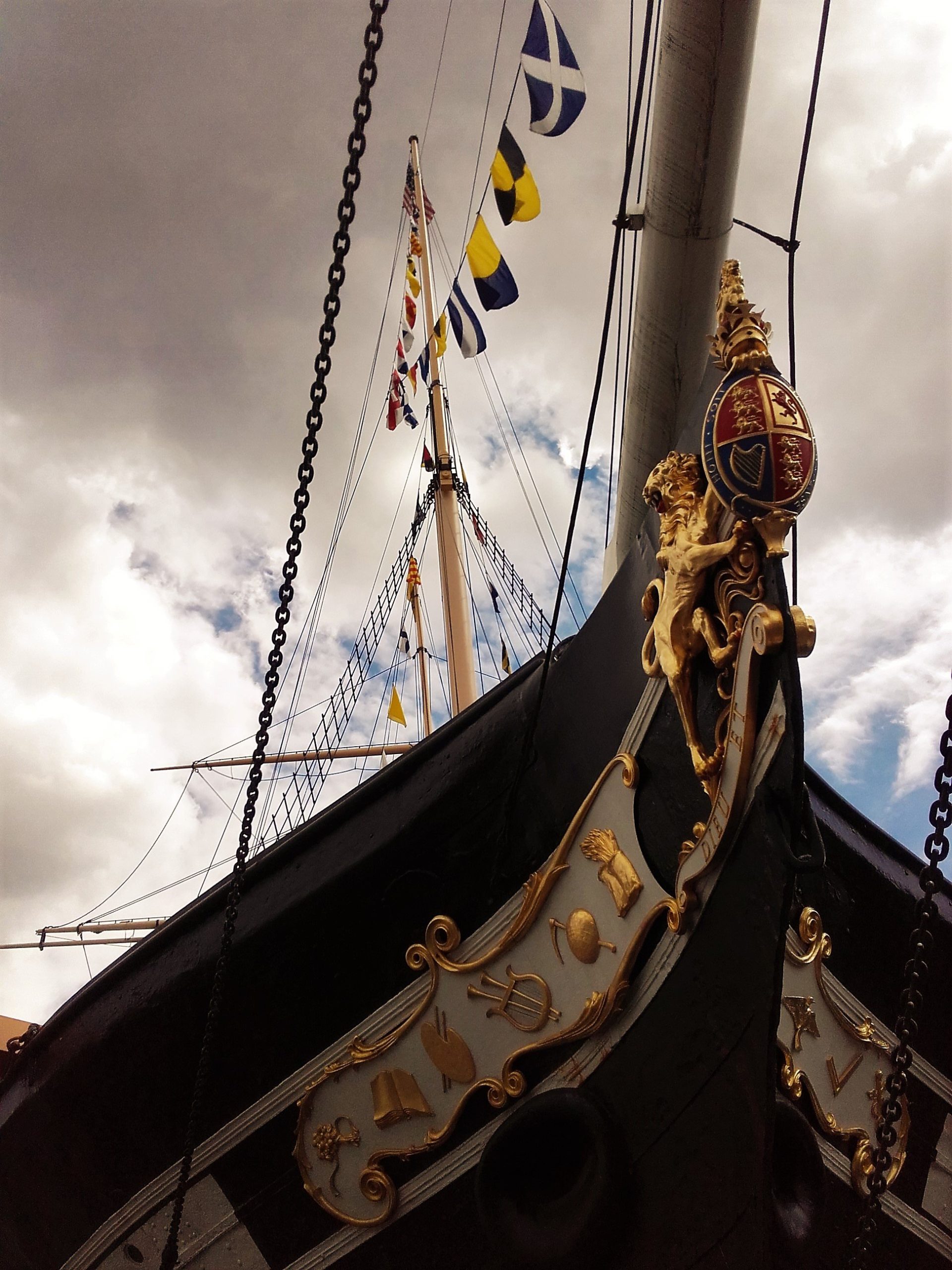
“Bristol fashion” is perhaps more recent,
first appearing in literature in Richard Henry Dana’s Two Years Before the Mast, 1840. But its origin must be traced at
least to before the beginning of the 19th century, when a dam and lock
were constructed at Bristol Harbor. Bristol, a city in southwest England on the
river Avon from which the nearby Bristol Channel and the eponymous cutter take
their names, has been a port since the 13th century. But the tidal
range here is second only to Canada’s Bay of Fundy, ranging up to 30 feet and
more. Therefore, at low tide a ship at anchor would settle into the mud,
heeling over to port or starboard on her keel. A ship that could withstand this
weight on her hull without leaking, and whose provisions and cargo were stowed carefully
enough that they did not come adrift when at an angle, was said to be “Bristol
fashion.”
Nowadays, “ship shape and Bristol fashion,”
often shortened to “Bristol,” refers to the condition of a boat maintained to a
fare-thee-well, with all essential gear, and with everything in its proper
place. I’ve never been quite able to achieve this admirable level of
perfection, because every once in a while I like to actually go sailing.
The
opposite of this is a boat where everything is “ahoo.” This term has a murkier
provenance but is a salty term for “totally messed up.” After a storm, the deck
of any boat may be somewhat ahoo (although you may find the contrary result
that all unnecessary equipment has been scoured away). But if you find yourself
aboard a vessel where the lockers are a dirty, jumbled heap, tools are rusting
away in a moldy bucket, and every line, rather than being properly coiled, is lazily sprawling on the
deck waiting for the moment it can jump overboard and into the prop, you have
every reason to doubt the condition of the keel bolts. See if you can arrange for shore leave.
by Jeff Hare, Instructor and s/v Emerald Sea Owner
Thursday July 9, 2026 at 10:AM
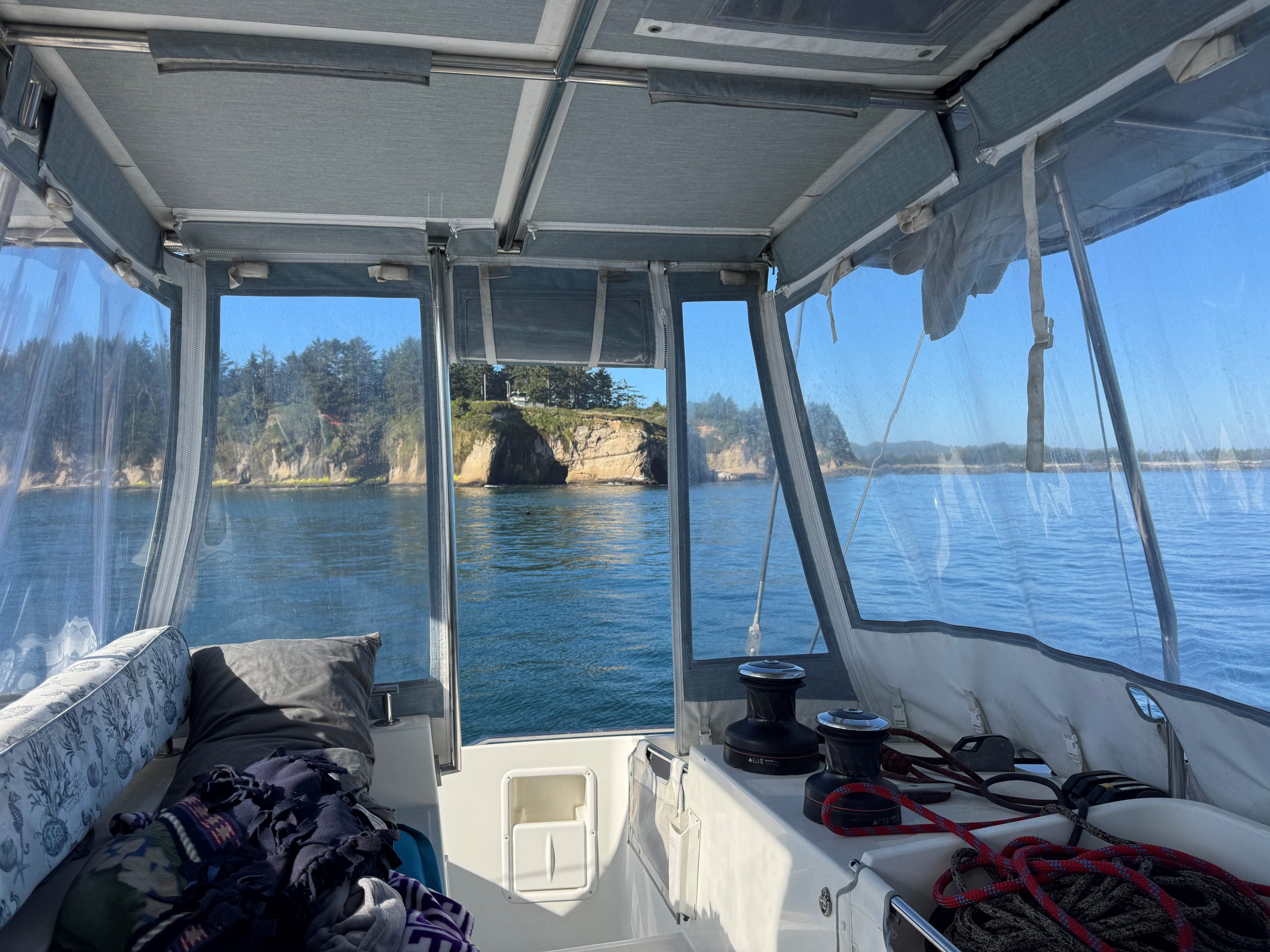
Greetings all members – ahoy from about 5 miles offshore from Coos Bay Oregon on our way back to Safe Harbor Marina Bay! While the prediction is for wind to be in the mid-20 knot range, the skies are clear, seas calm, and winds only about 10 knots. The sail is reefed however in preparation for the expected stronger winds as the nearest offshore buoy at Port Orford is currently showing 23 to 27 knots of wind there now.
While our cruising season was short this year, Emerald Sea spent eight months resting at the Charleston Marina in Coos Bay, Oregon. This marina is mostly a commercial fishing base with a large processing plat for Pacific Seafoods – Emerald Sea was one of the few sailboats here through the summer so she attracted a lot of attention.
We have the balance of the month of July to cruise so will be taking our slow time down the coast and plan on making several stops along the way, starting with Brookings tonight and for perhaps a few days.
There are only a few Catamaran classes aboard Emerald Sea scheduled for this year, so clear those calendars for October 3 and 4, or 24 and 25, or November 21 and 22 to get your ASA Catamaran certification. After that, with luck, Emerald Sea will continue heading south for a few months in Mexico – I will continue writing entries to keep you all up to date from time to time.
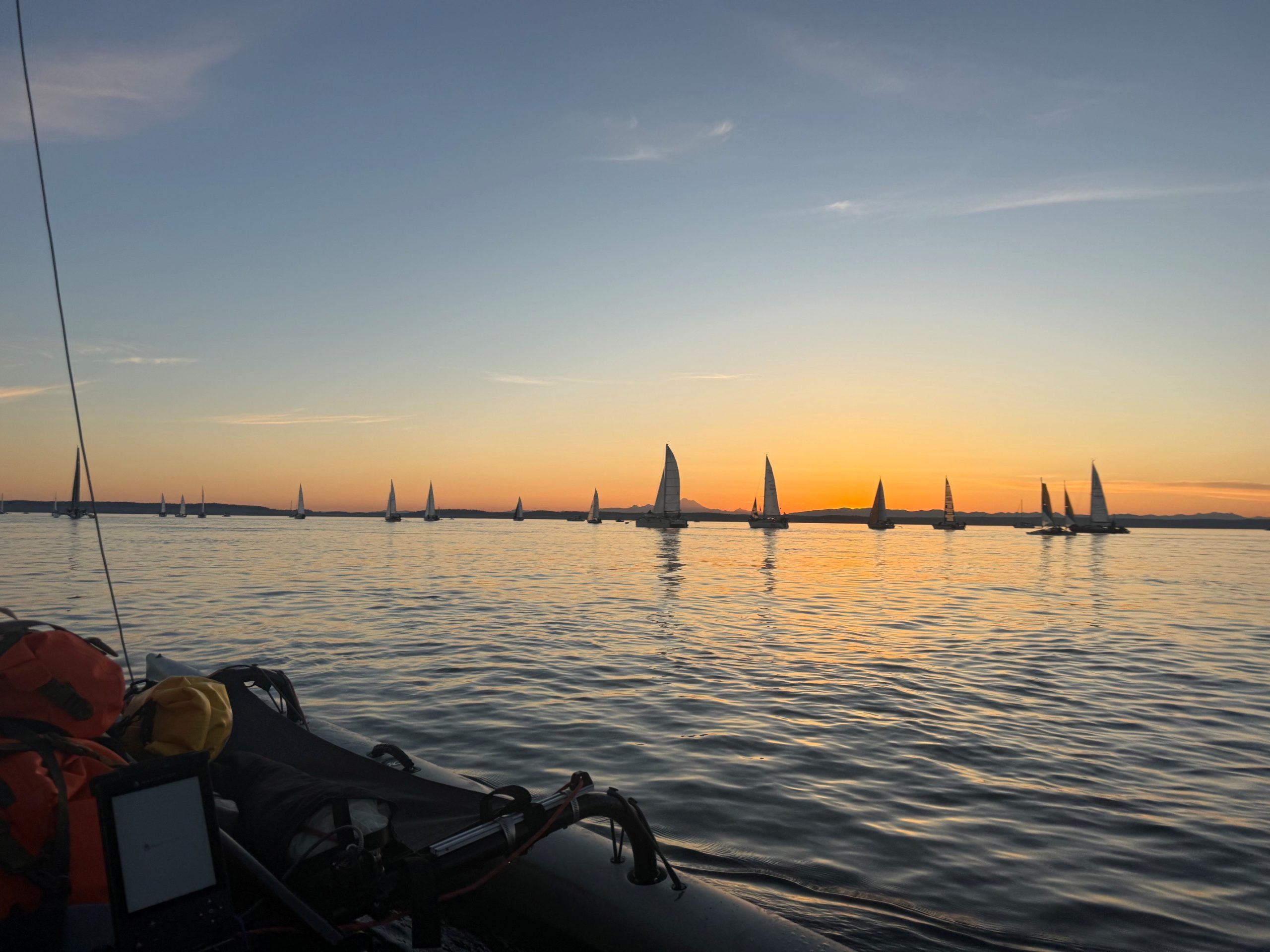
Race To Alaska starts in Port Townsend Washington and ends in Ketchikan Alaska, 750 miles in total. It’s broken down between a “proving ground”, a 40 mile run from Port Townsend to Victoria BC Across The Strait of Juan de Fuca and the remainder of the race from Victoria to Ketchikan. Not a lot of rules involved, except no engine on the boat and no support that is not available to anyone. So that means you can stop anywhere you want and eat and or buy things as long as that’s available to everyone.
We completed the proving ground yesterday so now there’s a few days of activities and rest in Victoria prior to the main event. That kicks off with a Le mans start on Wednesday at noon.
Anyone interested in the Race can look it up and see more detail and or follow along. (https://cf.yb.tl/r2ak2026)
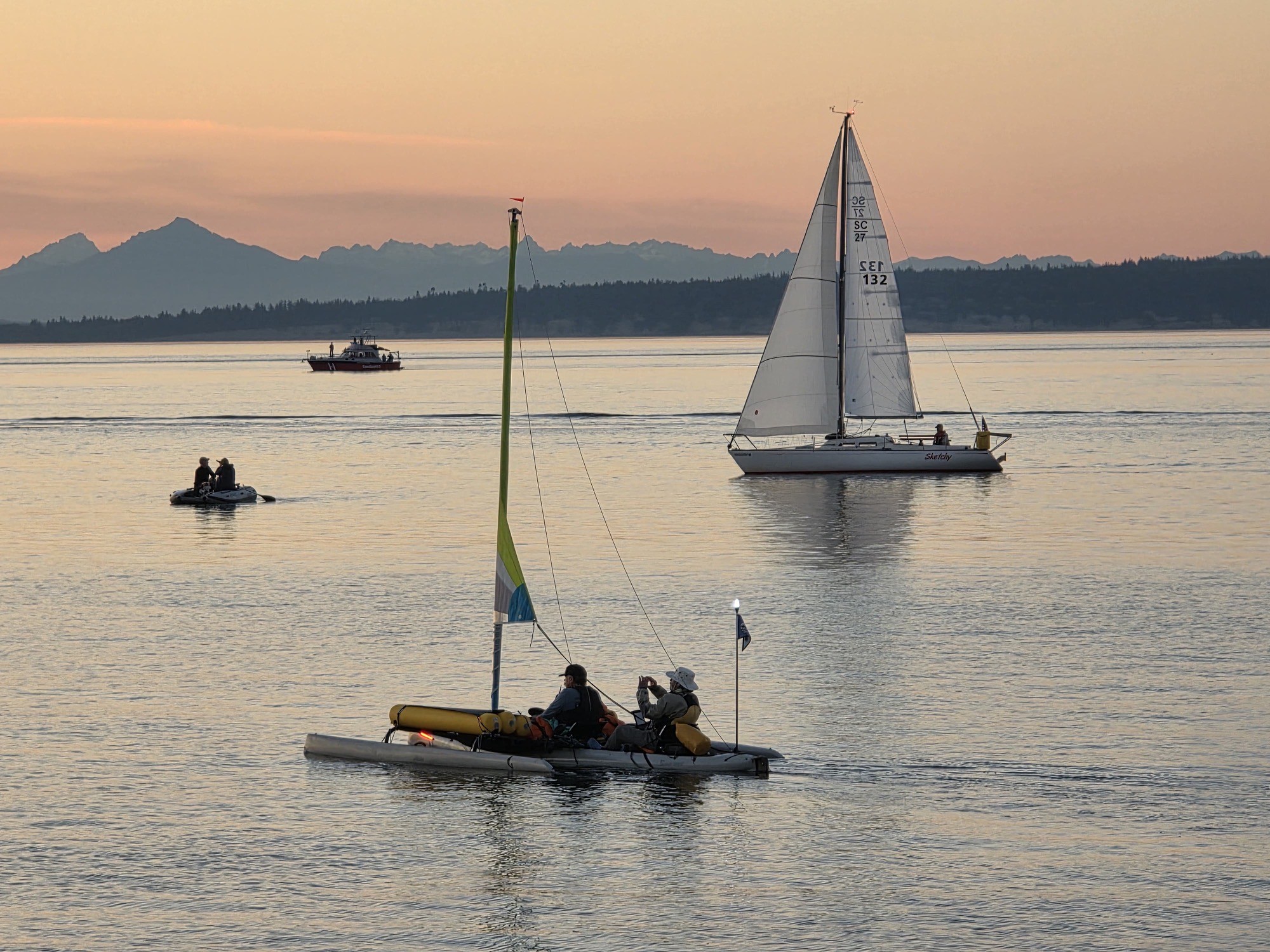
Our team name is Nothing to Sea Here. My buddy Brian and I are doing the race on my Hobie Tandem Island. You can look it up if you’re interested in seeing what it is, it’s not a lot of boat for this adventure. With a maximum payload of 600 pounds you have to be very intentional in what you bring. We dehydrated all of our own meals, with the exception of lunches, which are tortillas with various components. And lots of snack items, burning a lot of calories, you need to eat a lot. Last year we did the Washington 360 race, a smaller sister Race to this one, and we each lost about 10 pounds.
We will stop and camp each night, so we have everything we need to do that in relative safety.
We expect to average about 40 miles a day, but that can be quite challenging some days. The tides up here are much greater than the Bay Area, which means the resulting currents are no joke. Yesterday we got 2 miles from Victoria before the ebb turned to a flood, and instead of going forward, we went sideways.
If you want to follow the race, YB Races is the place to do so. You have to add the Race to Alaska to your “races“, then you can see where each team is, at any given time.
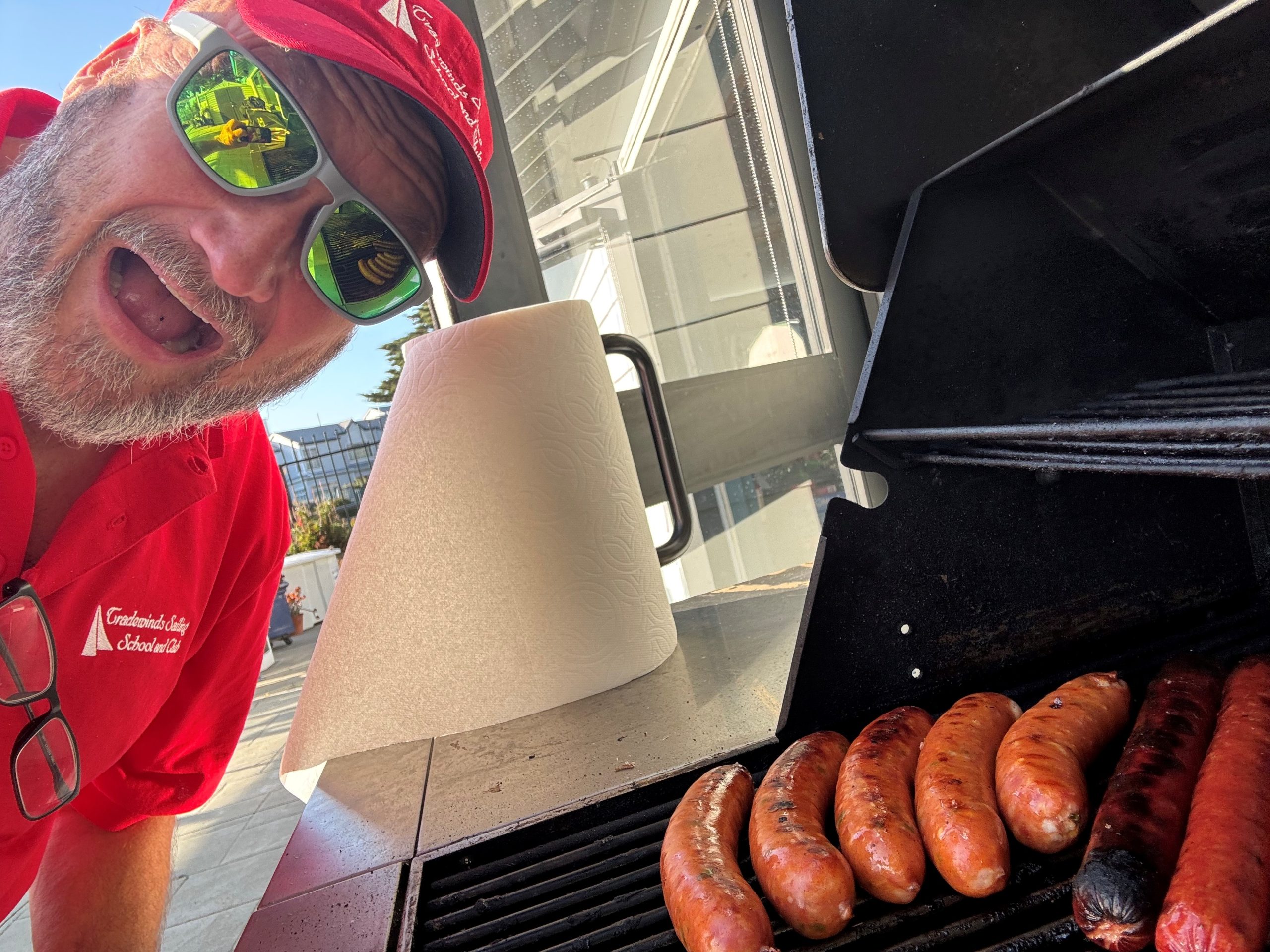
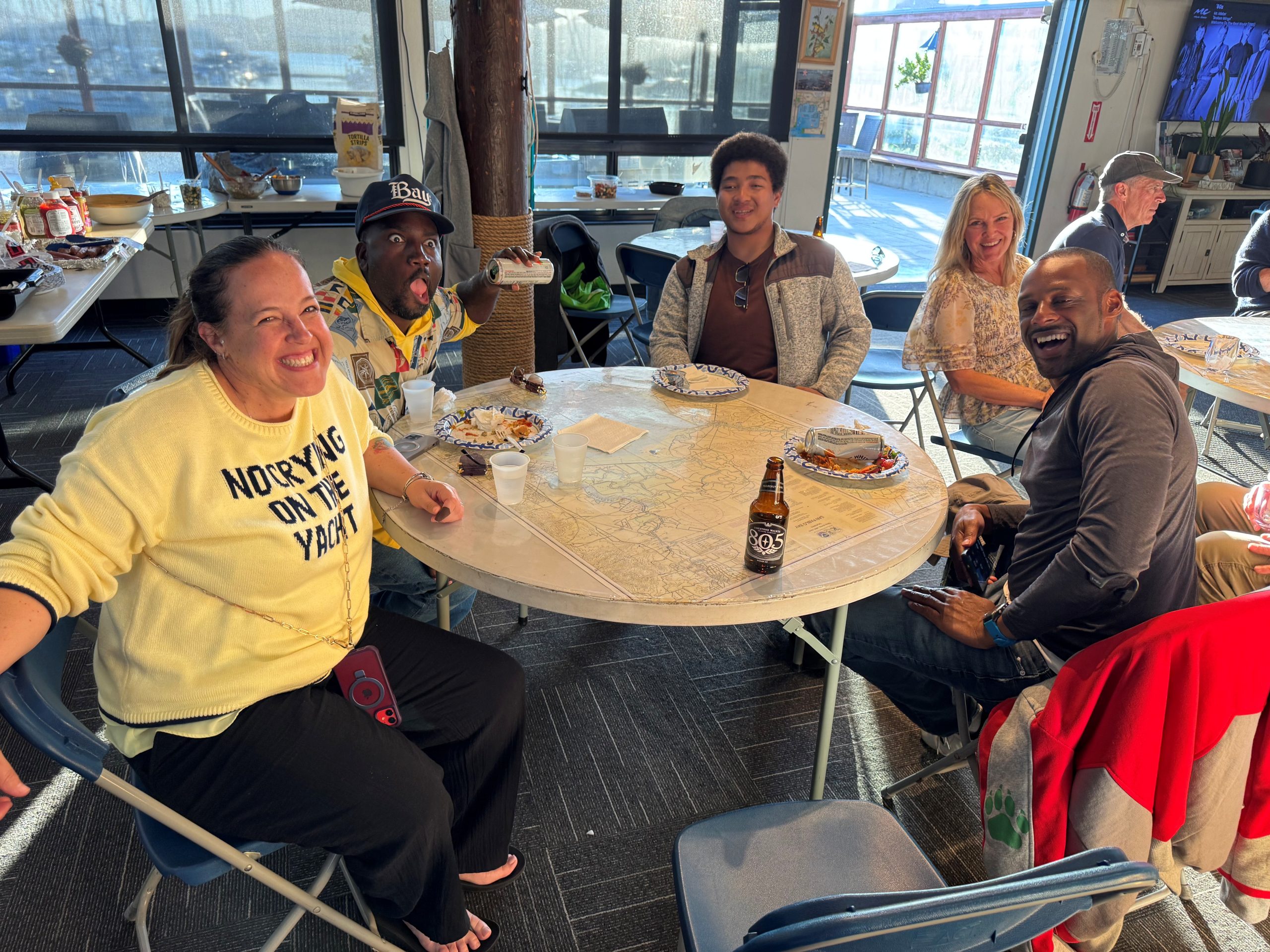
Ahoy TWSC Members and Sailors! Our club holds several networking events throughout the year and most recently our member social was held on March 30. There were freshly BBQ’d gourmet hot dogs, some members are in the wine business so we had some very nice tastings, and amazing side dishes to go ‘round. You really missed out on the spinach salad with generous strawberries and the quinoa salad bursting with flavor.
Make sure to check the calendar for upcoming events so you too can network with other members, trade tall tales, and increase your sailing networking.
Stepping onto a boat that smells like a bad gas station bathroom isn’t bad luck. It’s a flush procedure problem. And on boats with high-mounted holding tanks (looking at you, Beneteaus), the procedure matters more than most members realize.
Here’s what’s actually happening inside the system, and how to leave the boat the way the next sailor deserves.
The high tank problem
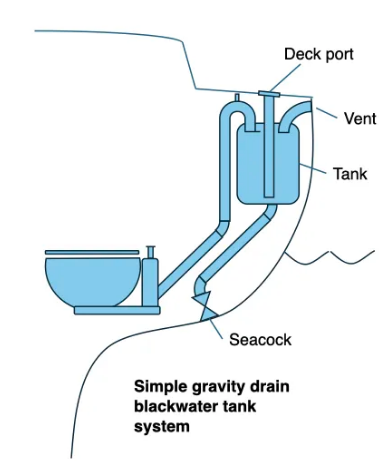
On the Beneteaus and other boats with the holding tank mounted up high, anything you pump through the head has to travel about six feet of vertical 3-inch hose, loop over the top, and drop into the tank. Once it clears that high point (call it “the hump”), it stays in the tank until the next pumpout. So far, so good.
The catch is everything **below** the hump. When you stop pumping, gravity takes over. Whatever’s still sitting in that vertical run of hose slowly slides back down toward the bowl.
If what’s in the hose is salt water, you have a problem. Salt water carries living organisms. They die in the hose. They rot. That funk people blame on the holding tank is almost never the tank. It’s the hose.
Why fresh water at end of day
During the day, you use the saltwater intake to flush. That’s how the system is designed to work, and that’s fine.
But before you leave the boat, two things need to happen:
1. Pump the holding tank out completely. 2. Close the saltwater intake seacock, then run 2 or 3 full bowls of fresh water through the head, pumping each one fully over the hump.
The fresh water does two jobs. It pushes any remaining salt water up and over into the (now empty) tank, and it leaves the entire hose run filled with fresh water instead of salt water. Whatever seeps back down the hose between now and the next charter is clean, not a science experiment.
About that joker valve
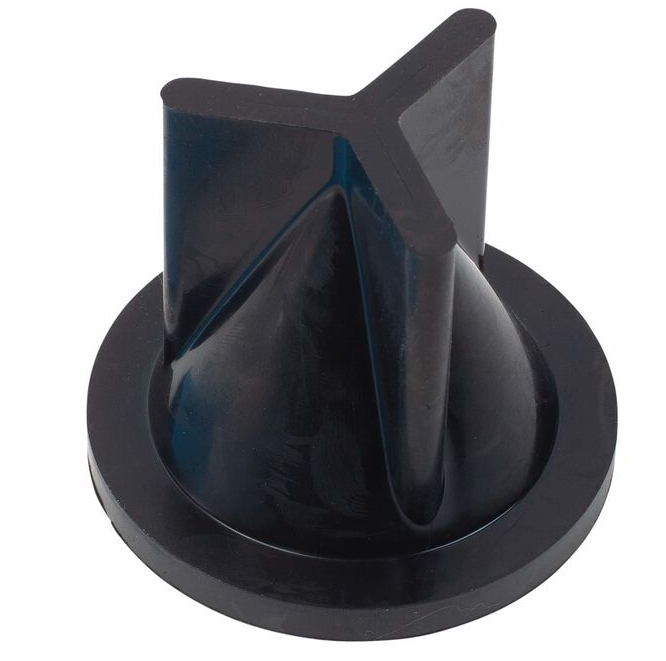
The joker valve is the small piece of rubber inside the head that’s supposed to keep things from coming back. People love to blame it when their boat smells.
On a boat with a high holding tank, the joker valve was never going to stop anything in that hose from seeping back. Even when it’s brand new, gravity wins against a piece of rubber. As the valve ages and saltwater buildup keeps it from sealing fully, the backflow just happens faster.
A new joker valve doesn’t fix a stinky head. A proper end-of-day flush does.
The procedure
1. Pump the tank out fully at the pumpout dock. 2. Close the saltwater intake seacock. 3. Fill the bowl with fresh water from the sink/shower. 4. Pump it all the way through and over the hump. 5. Repeat with 1 or 2 more bowls of fresh water.
The whole thing takes about three minutes. The next person on the boat (or future you) will be glad you did it.
If you ever step on a boat and it smells, it’s almost never a bad valve or bad luck. Someone skipped this step.
Here at TWSC, we’re busy training hundreds of people each month and thousands each year using the American Sailing Curriculum to help them become skilled, safe, and confident mariners in our beautiful waterways—at least that’s what most of our students aim to achieve.
One of our January Basic Keelboat classes had a unique group of students with different experiences and goals than what we usually teach. These students were all three of existing Captains here in the bay each with a 100-ton license, who already spend their professional lives navigating the bay’s waters. They already know the right-of-way, sound signals, knots, and ATONs, so it was an extra challenge to engage them during our class. For instance, after demonstrating the required knots, they kept challenging each other with increasingly complex knots, like, “Yeah, but I bet you don’t know this one!”
Overall, it was a pleasure to help these three learn sailing skills that motor vessel operators don’t often use: reefing, crew overboard recovery under sail, sailing up to a mooring ball, heave-to, and refining their tacking and gybing skills. I’m looking forward to seeing them take their families out on the water and enjoy the bay recreationally, just like we do.
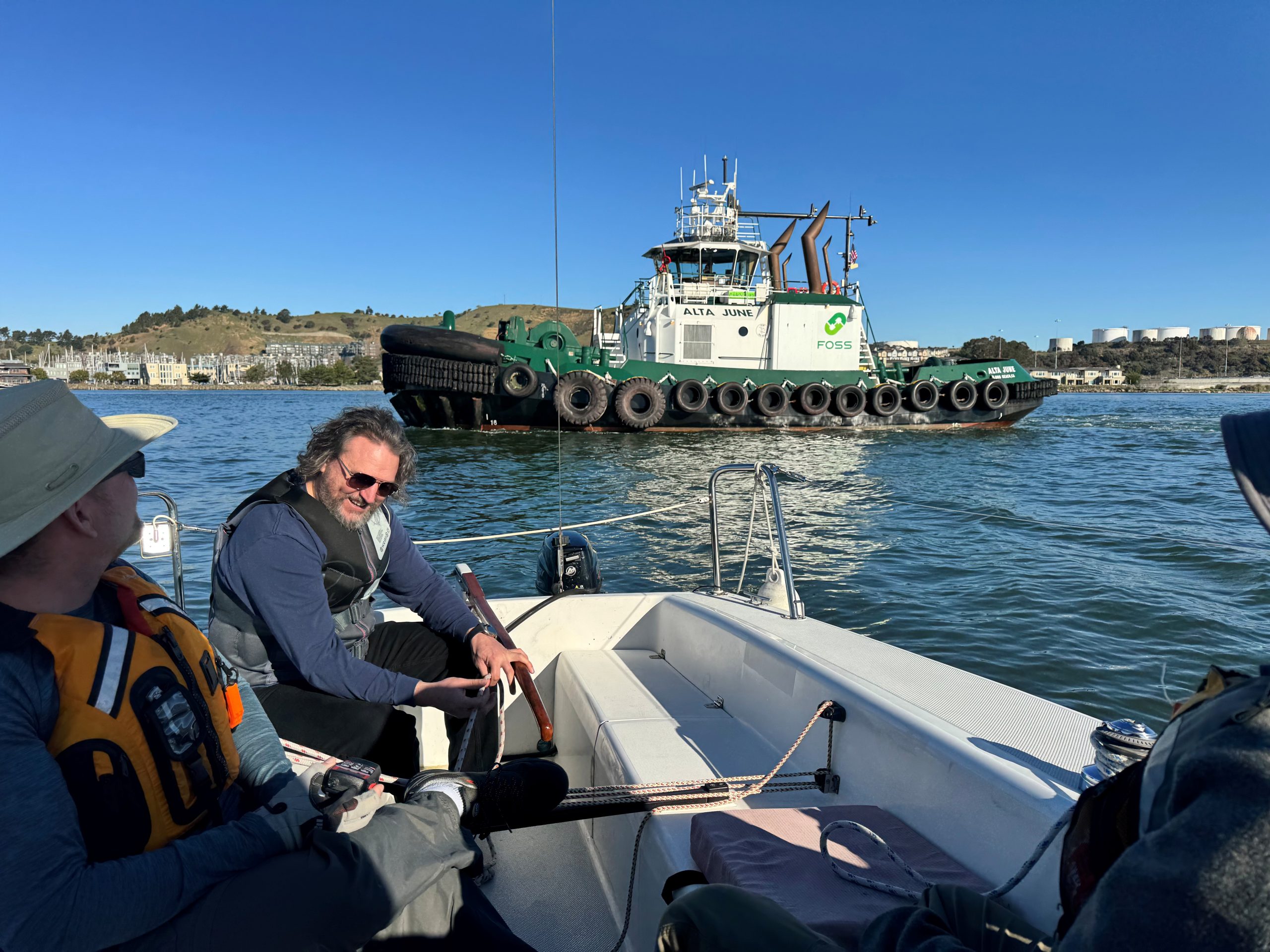
In the photo below, the student who is the professional Harbor Pilot for the bay borrowed the instructor’s handheld VHF radio and had a whole conversation with this tugboat on its way out to assist a tanker at the Chevron pier.
TWSC would like to give a big shout-out to the crew of August Moment on January 15, 2026, for their amazing rescue of a tricky balloon setup that had drifted into the bay. Sadly, we don’t have any pictures, but the balloon arrangement had numbers like 16, 19, 91, or 61 (depending on how it was facing), so it probably came from someone’s birthday party! We hope everyone involved is okay, and we know accidents can happen. However, balloons can be a real danger to marine life, birds, otters, and seals, as well as boat engine cooling water systems and equipment underwater.
TWSC members are encouraged to pick up any floating debris (or if you’re a “Burner,” MOOP stands for Matter Out Of Place) from our waterways whenever it’s safe to do so. For the crew of August Moment, this was a chance to practice their crew overboard recovery drill, so they got to check off several “good for you” boxes.
Club members may notice the car carriers occasionally in our shipping channel, with white vans loaded with people driving up the ramp, and back out again followed by shiny new cars like ducklings following their mother. These are temporarily stored in the large lot before eventually being loaded on train cars for delivery all across the Americas.
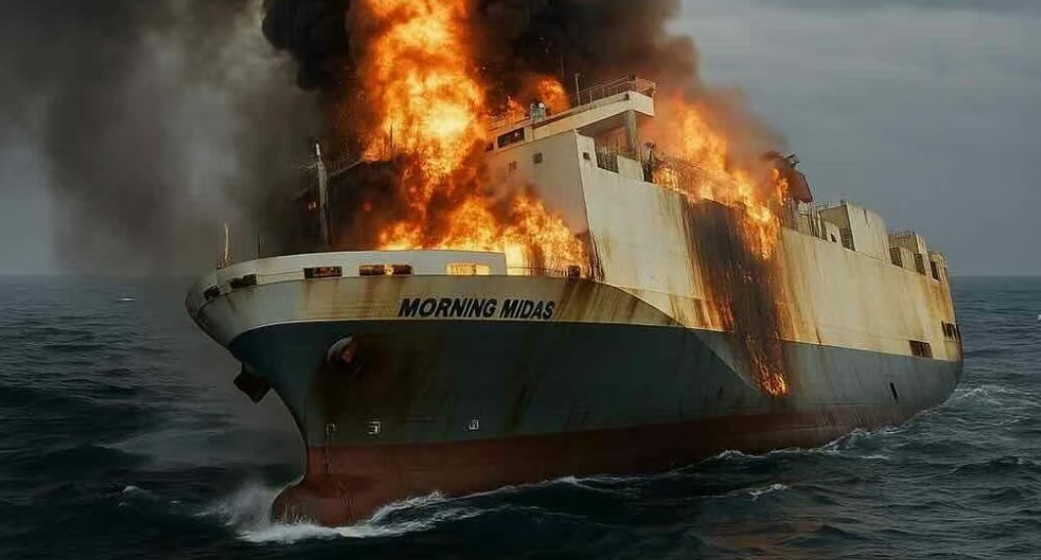
Unfortunately we have to report that a similar car carrying vessel that caught fire in the pacific and abandon last week, has sunk with 3,158 new cars aboard! It is thought that the fire may have started in a lithium battery of one of the 65 electric vehicles aboard and spread to the others. As you know by your training, Class D fires are nearly impossible to extinguish – proved out in this case.
Unfortunately this massive sinking is likely to contribute to the Pacific Garbage Patch (link below). Let us all keep doing our part to keep the San Francisco Bay as clean as possible.
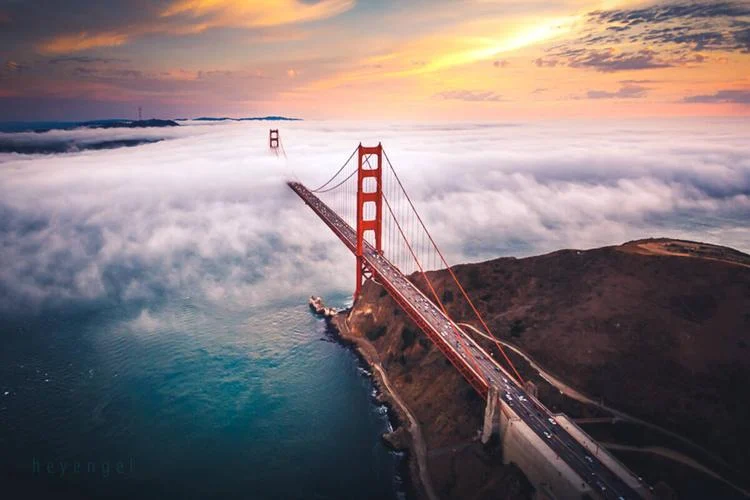
There is an old saying that “if you can sail here”—meaning San Francisco Bay—”you can sail anywhere.” With the exception of coral reefs, we do feature most of the scary stuff you’re likely to encounter at sea, including heavy winds, strong currents, shoals, lots of traffic from dinghies to container ships, lee shores in every direction, and fog. So it is a great preparation for the world beyond. San Francisco is famous for its fog. Of all our challenges, I dread fog the most.
It can catch you unawares. I was once returning from Drake’s Bay, before GPS and without radar. Right around Mile Rock, while I was near the shipping lane, the ceiling went from the top of the bridge towers right down to sea level in about one minute. All I had for navigation was a compass, and I knew that there were two container ships on their way out of the harbor, now completely invisible. I was, um, in their way. Think fast, skipper. I hailed Vessel Traffic Service on VHF 14 and told them of my situation. They have powerful radar capability and can see all vessels in the Bay, but I was nervous about this because I’d never called them before and wasn’t clear whether they would respond to recreational boaters. They assured me it was not only fine, but that even if it were a clear day, if I had doubts, they there for the purpose of helping mariners avoid collisions. I asked if they could tell me whether those ships were going to favor the north or south tower as they exited the Bay, and they said “stand by.” They called both captains and got back to me, saying that both would be closer to the south tower. I headed north by the compass, and sure enough, before long I saw them pass astern, right into my previous course.
Another time, I was heading along the south coast of Spain on Maverick with Terry Shrode on the way to Gibraltar, when fog blinded us within about five minutes. Our radar had been destroyed by lightning about a month earlier and we were to pick up spare parts in Gibraltar. We did have GPS, though, so we wouldn’t be paying an unwanted visit to the shore, but this is a heavily trafficked shipping zone. We turned on the nav lights and headed a bit inshore in the attempt to avoid awkward encounters with ships. I placed myself on the bow with Terry on the helm. After an hour or so of boredom, I suddenly spotted a vague dark form to starboard which I took to be a ship, and yelled “turn to port!” Within about ten seconds, the entire view filled with a wall from horizon to horizon. It was the side of a container ship, and what I’d spotted before was its rudder. We were about two or three boat lengths from contact.
These are but two of a score or so of troubling fog encounters. Do not imagine that it’ll never happen to you.
Fog occurs when the temperature is at or below the dew point. Fog along our coast occurs because the cold water from the California Current cools the moist air just above, causing it to condense into fog. The prevailing westerly wind brings the fog into the Bay, and as it comes over the hills or spreads through the Golden Gate and leaves the “slot,” the air warms and mixes with the warmer air in the Bay. If the ambient temperature is cooler, particularly in morning or evening, the temperature will remain below the dew point and fog will extend farther inland.
When you see it cascade over the hills in Sausalito, what you’re seeing is the air warming as it comes down the hills into the protected Bay, rising enough in temperature to exceed the dewpoint while the flow of air continues. The rise in temperature is caused by adiabatic warming, and mixing with the warmer air in the Bay. Adiabatic warming results from the very slightly higher pressure and consequent higher temperatures at lower altitudes. In saturated air this is around 3° per 1000 feet, but it only has to rise just above the dewpoint to dissipate.
So how do you deal with it?
When fog occurs, turn on your navigation lights even if it is daytime and sound the appropriate signals (Colregs rule 20 and 35) depending whether you are under sail or power. Power driven vessels “shall sound at intervals of not more than 2 minutes one prolonged blast.” A sailing vessel shall “sound at intervals of not more than 2 minutes three blasts in succession, namely one prolonged followed by two short blasts.” “Prolonged” means 4-6 seconds. “Short” means one second. Blowing the sailing signal with the horn on your boat according to regs may require two minutes between signals to catch your breath. 4-6 seconds is a long time to blow. Don’t ask me how I know.
Attend to your navigation. Radar and GPS are your friends. Even with the first, you absolutely need to keep a very close watch. You’ll find this nerve-wracking. GPS will get you home, but what if you lack it? When conditions are ripe for fog, i.e., very cool temperatures, keep on top of your coastal piloting with dead reckoning and frequent fixes. Rember that current. Take the coastal navigation class and then practice while you’re underway so when this occurs, navigation is not an unfamiliar experience. If the fog descends suddenly, you’ll have a pretty good idea where you are in order to start plotting a safe compass course on your chart. I’ve been in Potrero Reach when the fog was so thick I had to do this to get down the channel, as I couldn’t see the next daymark.
At Tradewinds, our manual clearly states club rules: “In both winter and summer, fog on the Bay can descend very rapidly and create extremely dangerous sailing conditions. If visibility is poor when leaving the marina, stay very close to home. If you are across the Bay and see fog rolling in or visibility worsening, immediately take a compass bearing to safety and head there.”
The prudent skipper takes nothing for granted. Know the procedure and if fog threatens, inform the crew of the situation and what you plan to do, which will help calm their nerves, and yours as well
If, despite reading this, you have neglected all of the above and find yourself too freaked to continue and are a deer in the headlights, remember that the folks at VHF 14 can see where you are. As a last resort, call the Coast Guard on 16. They’ve rescued people for much worse seamanship than being lost in the fog.
We are pleased to announce that the first Tradewinds Sailing School and Club “FURL UP THE WEEK FRIDAYS” has begun!!
Please consider attending one or more of these member networking opportunities! It is a great way for new members to meet other newbies as well as veterans. Instructors will always be attending to help with fire-pit-tables, the Barbeques and ready to discuss any sailing topic you may think of.
As a personal favorite aspect of mine, the plan is that there is no plan! There is no particular agenda, topic, or theme – simply a raw networking event intended to increase the social interaction among our members and keep getting us all out on the water more! (Where have I heard “more time on the water” before? Let’s get out there!) When you come consider bringing food and/or beverage for yourself and/or to share with others, but if you don’t that’s OK! (There is no plan!) Come as you are ready only to engage in conversation, meet other members, and watch the boats from the patio!
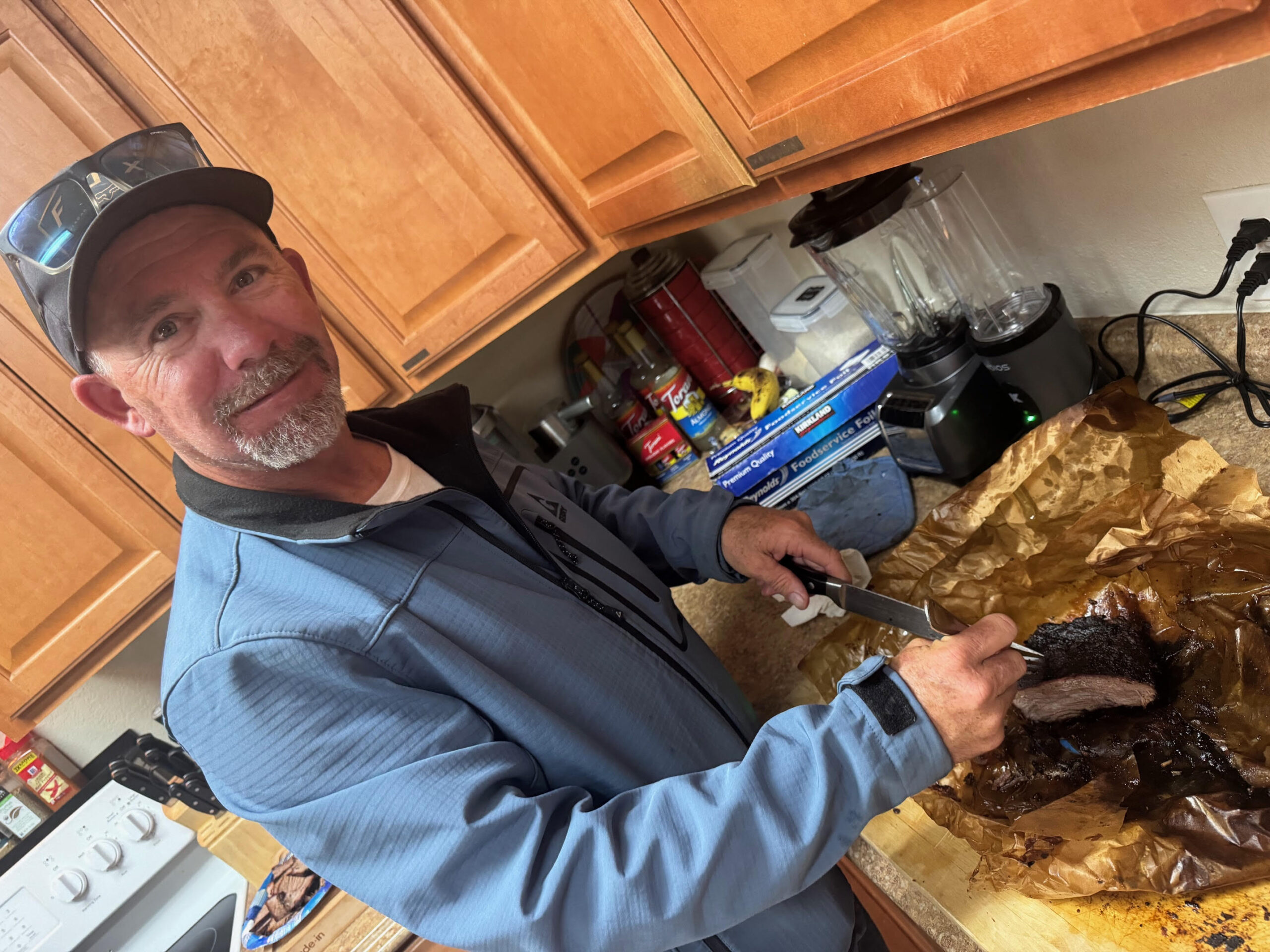
The first event was held on May 16 after a sizable brisket mysteriously appeared in the clubhouse the day before. — Todd skillfully lit up the smoker and everybody in a half-mile radius was tempted by the amazing smells coming from the unit ALL DAY LONG! Veggie, fruit, and other delectable delights were enjoyed while tall sea stories mingled with discussions of proper sail trim and overnight anchoring experiences almost simultaneously!
If you are sailing Friday; “Furl it up” while the traffic dies down. If you are sailing Saturday; “Furl it up” and come the evening before! If you are just passing through; “Furl it up” and stop by! You see a name on the Crew Search list and want to meet them in person; “Furl it up”! A good time was had by all – don’t miss the next one!
The next Furl Up The Week Friday will be on June 13, then July 18, Aug 15, Sept 12, Oct 10. Meet new friends! Arrange to crew with other members! Take advantage of this wonderful members networking opportunity! You never know what libations, treats, and new connections there may to experience until you come, so “Furl Up the Week” on June 13!